
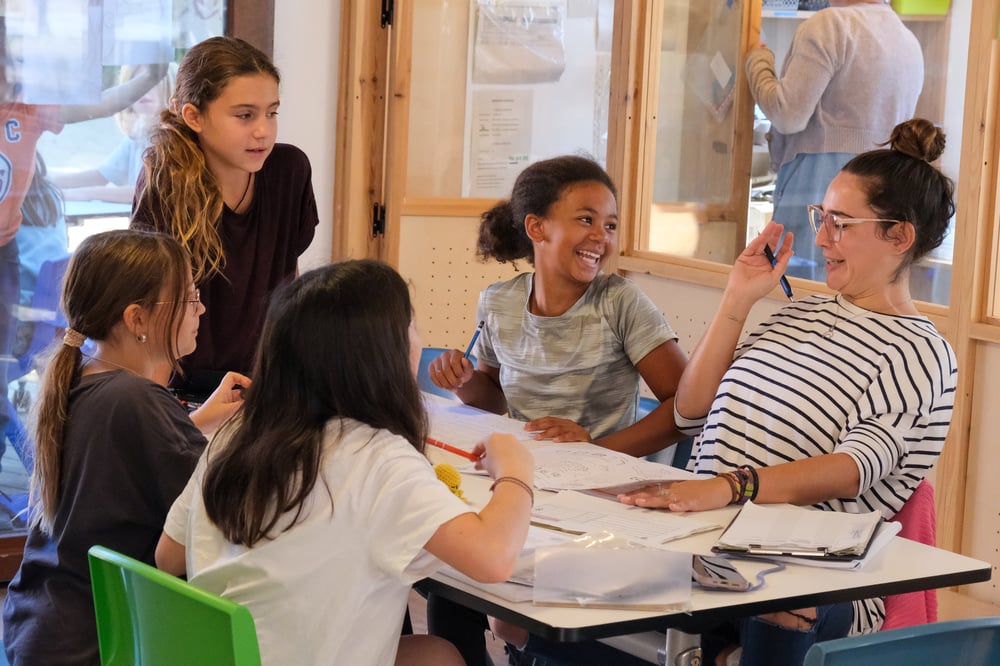
When parents choose a school, they often focus on curriculum, academics or results. But research in learning science and educational design shows that something deeper shapes not just how children learn but how well they learn: the environment around them.
At Learnlife, where our approach to designing learning environments has been shaped in part by the work of educator and learning designer Devin Carberry, we often reflect on a simple but confronting idea: that the design of traditional schools can work against the kind of learning we say we value.
In other words: the environment is part of the education.
In his book The Spaces that Make Us, architect and learning designer Danish Kurani makes this explicit: the conditions for learning are not accidental, but intentionally designed. Through his Baaham framework — a design philosophy based on the idea that people and environments continuously shape one another — Kurani explores how space, structure and daily experience shape whether children feel able to focus, explore, create and engage with learning in meaningful ways, reinforcing the idea that environment is not a backdrop, but a fundamental part of how learning happens.
“As we consider the many ways to improve school, it’s time to add space design to the list,” says Kurani.
What We Mean by a Learning Environment
When we hear the phrase “learning environment,” it is easy to picture a classroom: desks, materials, perhaps a playground outside. But in learning science and educational design, environment is understood far more broadly.
A learning environment is the atmosphere children move through each day. It is the emotional tone, the relational climate, the invisible signals about what matters here and who belongs. It is present in the rhythms of the day, the freedom to explore, the way curiosity is received or redirected.
In this sense, the environment is not the backdrop to learning. It is part of the learning itself.
How Environment Shapes the Learner
Children are highly responsive to context. Over time, the environments they inhabit shape how they participate, how they approach challenges and how they see themselves in relation to learning.
In his book, The Future Will Not Be Taught, Carberry notes, the design of a space doesn’t just support learning but it actively shapes how learners interact, collaborate and relate to one another.
As Kurani similarly proposes, well-designed environments don’t just support learning — they shape behaviour itself: “By observing and listening to students and teachers, we identify obstacles to learning and can then design an environment that will make the most desirable behaviors the easiest ones to perform.”
In spaces where children feel known and safe, they tend to engage more openly. They take risks, ask questions and persist when something feels difficult. Their curiosity remains intact, and confidence grows from experience rather than comparison.
In environments oriented primarily toward instruction or performance, a different pattern often emerges. Children learn to look outward for approval, to avoid mistakes and to measure themselves against others. Motivation shifts from internal to external, and learning can become something done for school rather than for self.
Across years of schooling, these daily experiences accumulate into identity. Children form quiet beliefs about whether they belong, whether they are capable and whether learning is something they own or something imposed upon them.
How Learning Environments Support Children to Thrive
Across both research and lived practice, certain qualities consistently appear in environments where children learn with confidence and wellbeing.
These are places where children are seen as individuals rather than categories, where mistakes are treated as part of learning rather than failure, and where curiosity is welcomed rather than managed. Children experience some degree of agency — the sense that they can make choices, follow interests and influence their learning. Learning connects to life beyond school, so meaning is felt rather than explained.
In well-designed environments, learning is not confined to a single room or even a single building. As Kurani describes, “the learning opportunities are not just on campus. The entire neighborhood becomes a place where students can learn.”
Relationships carry trust rather than comparison, and growth is supported rather than judged.
These conditions are not tied to a specific curriculum or pedagogy. They emerge from how a learning environment is designed and inhabited each day.
.jpg?width=1920&height=1280&name=Eco%20Hub%20%20(17%20of%20163).jpg)
How Physical Space Shapes the Learning Environment
When we think about learning environments, we often begin with relationships and culture. Yet physical space also communicates powerful messages to children about how learning happens here.
Space can invite movement or stillness, exploration or compliance, collaboration or isolation. It can signal ownership or control. It can suggest that learning is fixed and prescribed, or open and evolving.
As Kurani notes, “the experience schools want to provide and the spaces they use oftentimes simply aren’t in alignment,” which helps explain why even well-intentioned schools can struggle to create the kinds of learning behaviours they value.
In many conventional school settings, space is organised for efficiency and supervision. Desks face forward. Materials are stored out of reach. Walls display finished work rather than work in progress. Movement is limited, and learning is expected to occur in predetermined ways.
Children quickly learn the underlying message: learning happens where and how adults direct it.
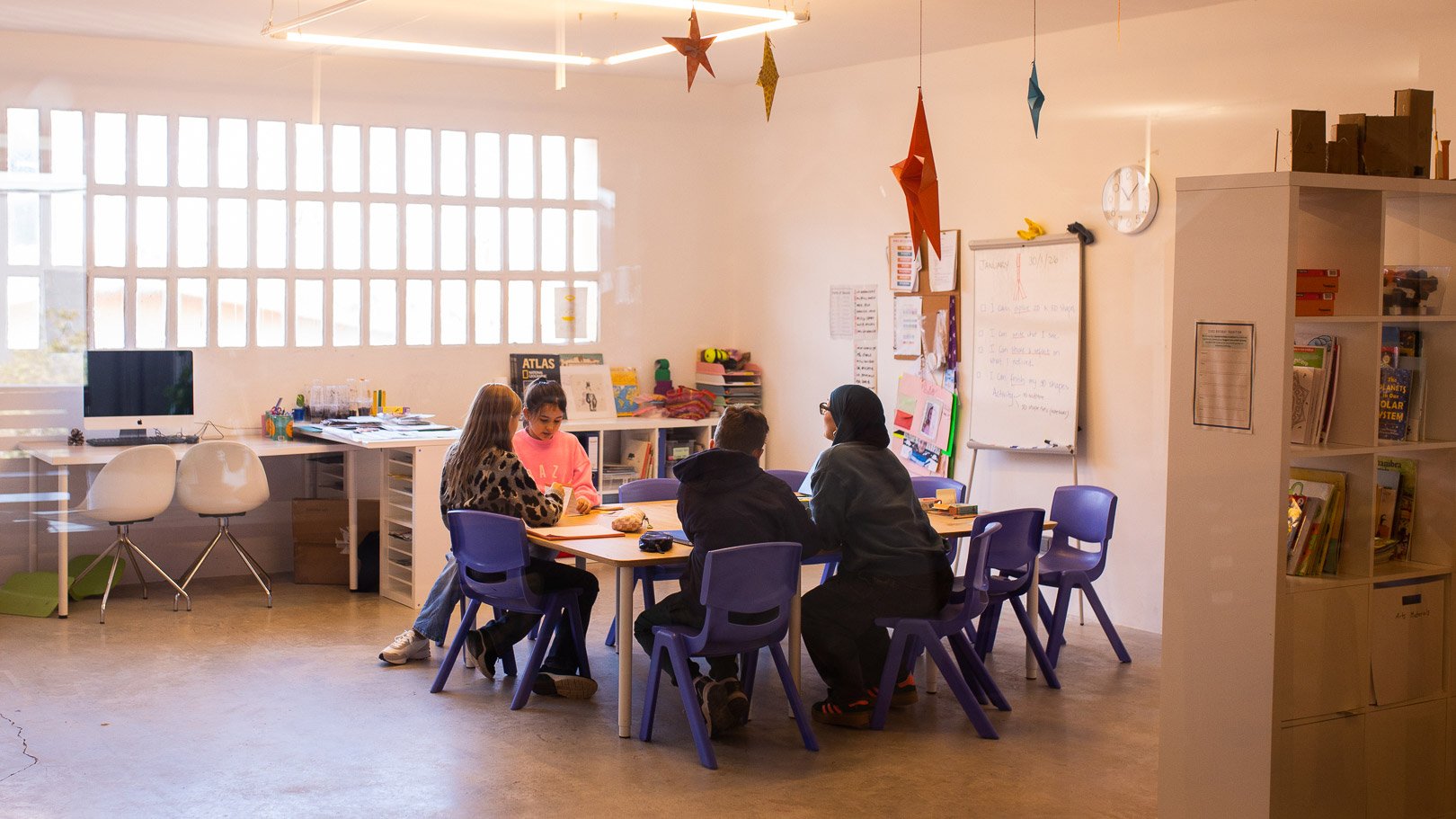
By contrast, flexible and permeable learning spaces communicate something different. When children can move, reconfigure, gather, spread out, access materials and shape their surroundings, they experience learning as something they actively participate in. Space becomes responsive rather than restrictive.
As Carberry describes, different types of spaces support different kinds of learning: open environments foster collaboration, while more flexible or specialised spaces support focus, choice and hands-on exploration.
This kind of space subtly redistributes ownership. Children are not placed into an environment designed for control; they inhabit one designed for agency. They can choose where to focus, how to collaborate and how to use the tools around them. The environment suggests trust before a word is spoken.
Over time, these spatial experiences contribute to learner empowerment. Children come to see themselves not as occupants of school, but as participants in learning. They understand that environments can be shaped, that learning can move and that they themselves have influence.
In this way, physical design and relational culture reinforce one another. An environment that invites autonomy supports adults to trust learners, and trusted learners use space with increasing responsibility. The space and the people co-create the learning conditions together.
What to Look for in a School Learning Environment
For parents exploring schools, environment can be harder to name than academics, yet often more revealing. It is sensed before it is analysed.
You might notice how children move through the space — whether they seem relaxed, absorbed, at ease with themselves and others. You might observe how adults speak with children, and how children speak back. You may sense whether questions are welcomed, whether ideas are taken seriously, whether learning is visible in many forms rather than confined to tasks or outputs.
Often, these impressions tell more about daily learning experiences than formal descriptions ever could.
How Learning Feels at Learnlife
At Learnlife, we intentionally design environments where children feel known, safe and empowered to explore, because we understand learning as emerging from the interaction between learners, relationships and context.
This reflects the same principle Kurani describes: environments are not neutral — they are designed to shape how people behave, interact and learn.
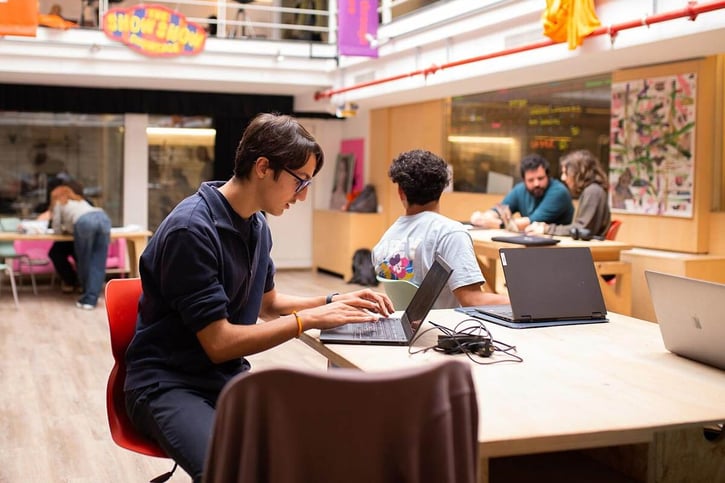
Across our hubs, the spaces feel open and connected rather than closed and fixed, more like shared studios than classrooms, so children can move, collaborate and shape their learning more freely.
As Carberry explains, “The design of a learning environment should align to the vision and pedagogical concept… spaces are flexible, collaborative, authentic, and designed to mirror the real world so learning can happen anywhere.”
Light, visibility and flow allow learners to see possibilities around them. Work happens across surfaces, tables and shared areas. Learning is not contained to a single position or posture.
In practice, this means designing spaces in response to how learners actually use them. As Devin describes, when learners hesitated to enter workshop spaces to access tools, those tools were moved into open areas, making them easier to reach and use without disrupting others. Small design shifts like this can significantly change how learners engage with their environment.
Learners have access to a range of seating options—from bean bags and stools to more structured setups—as well as a variety of spaces, from open, interactive environments to semi-enclosed areas that support focused solo work or small group collaboration. This flexibility allows them to engage more actively and take greater ownership of their learning.
Like the environments Kurani describes, where “the most desirable behaviors [are] the easiest ones to perform,” these spaces invite participation, collaboration and ownership rather than compliance.
The aim is not only knowledge, but confident, self-directed young people who know how to learn in any environment they encounter next.
Why Environment Matters for the Future
Children are growing into a world that places increasing value on adaptability, creativity, collaboration and self-direction.
These capacities do not develop through content alone. They grow through experience, within environments that invite participation, collaboration, decision-making and reflection.
When children move through environments that invite exploration, collaboration and choice, they regularly practice navigating challenges, working with others and pursuing their interests. In doing so, they are not only gaining knowledge. They are learning how to learn. They begin to experience learning as something they can shape and carry with them across contexts and throughout life.
In this sense, environment does not simply support learning. It shapes who children become as learners.
A Final Reflection
When we think about education, it is easy to focus on what children learn. Yet an equally important question sits just beneath:
What kind of environment is shaping how they learn?
Across years of daily experience, environments quietly influence motivation, confidence and identity. These foundations often endure far beyond specific subjects or outcomes.
And over time, learners leave not only with knowledge, but with the quiet certainty that learning is a space they belong in.
If you’re exploring schools, you’re welcome to step into a Learnlife hub and experience the atmosphere, spaces and relationships for yourself.
Discover our learner-centred hubs at one of our Open Houses.
If you want to purchase Danish’s book, you can find it here.
Written by